Green stucco is becoming popular and it's a smart color. It blends with nature, boosts curb appeal by 15–20%, and forgives more dirt than neutrals ever could. The secret?
Zeroing in on the right green and pairings that elevate any architecture, from Mid-Century gems to coastal escapes.
Explore these curated green stucco exemplars, which were handpicked for clarity and impact, to see what really shines in green! Get manufacturer color recommendations on matches, trim tricks, and real-talk tests to sidestep common regrets. Your green era starts here... let's build it right.
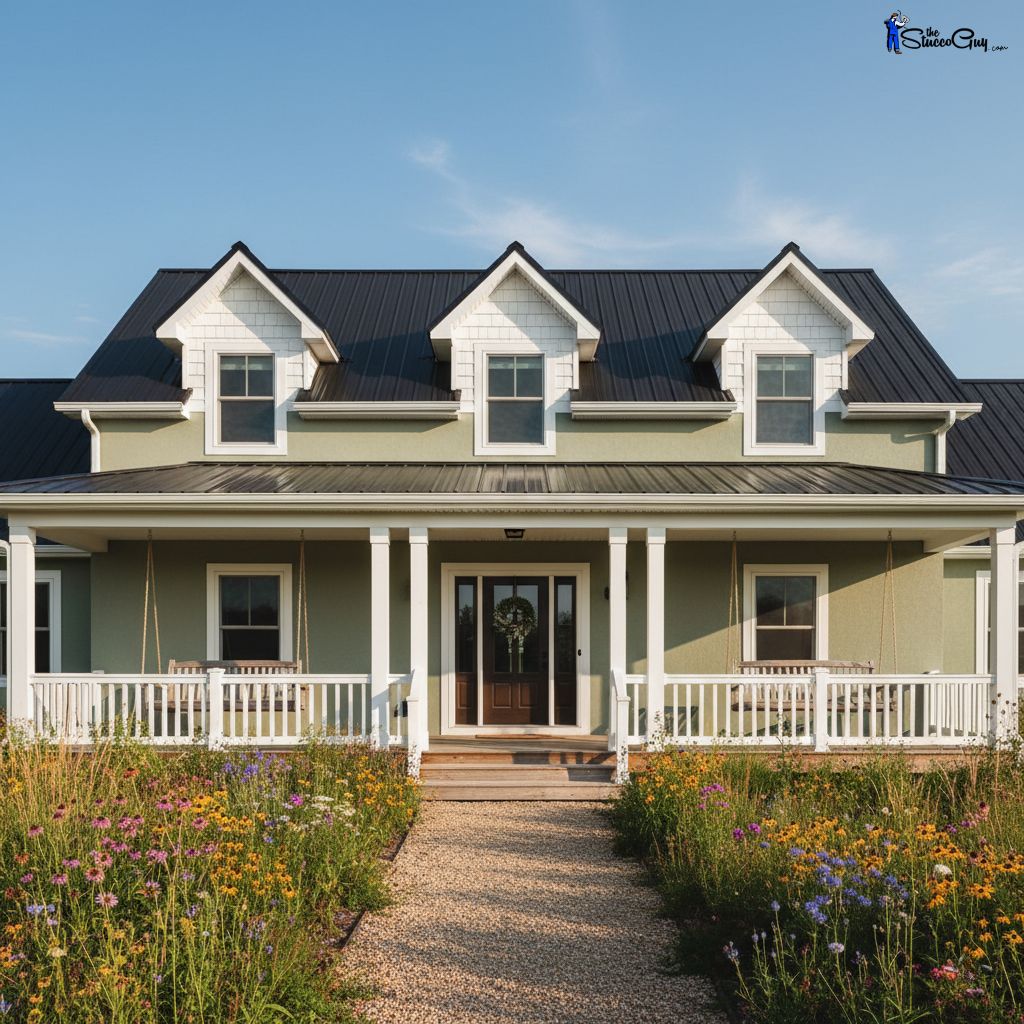
This two-story beauty uses a soft sage green stucco base to ground the crisp white trim and bold black metal roof, creating a welcoming farmhouse vibe that feels fresh yet rooted, which is perfect for blending into the rolling countryside without fading into the fields.
Green Shade: Light sage family type of color that is subtle, versatile and has neutrals that whisper "nature" without shouting.
Dryvit Early Moss (#491): Airy pale moss-green, ideal for sunny areas which reflects light without washing out the color (LRV ~50 for balanced fade resistance).
Key Pairings: Black roof adds drama, while the softer white shiplap gables and wooden porch swings keep it airy. Wildflowers (coneflowers, black-eyed Susans) compliment the green nicely for low-maintenance curb appeal with a wild flair.
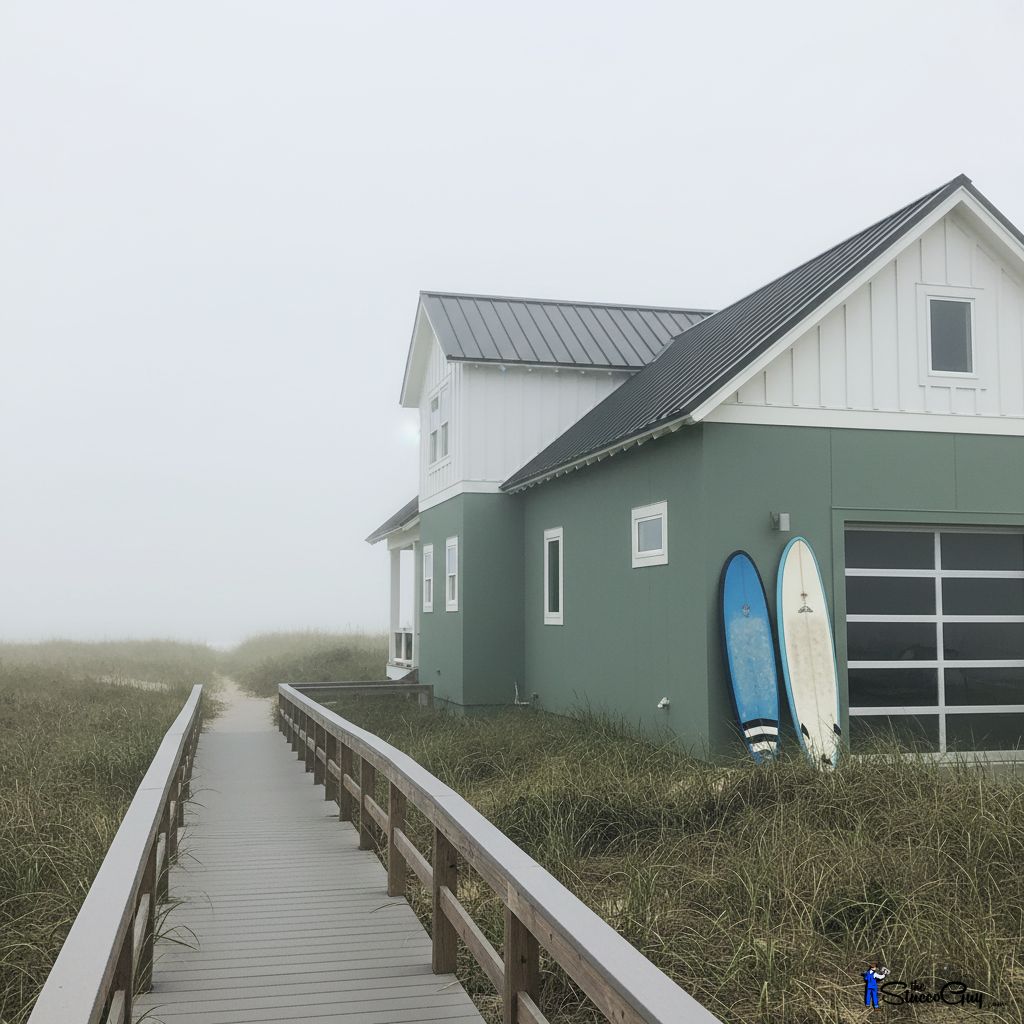
This coastal home leans on a muted and darker sage green stucco color that gives off a soft, low-chroma, and matte look that seems to blend naturally with the dune grass and fog. Bright white board-and-batten, a charcoal standing-seam roof, and a clean garage door sharpen the silhouette, while the boardwalk’s wood tones keep the palette relaxed and beach-casual.
Green Shade: Light to mid sea-sage colors work well with quiet gray undertones, creating a calm rather than minty color. Reads steady in marine light and resists visual washout against pale sand and overcast skies.
Dryvit Aspen Green (#507): Classic soft sage with warm gray hints. Choose a cement-based finish for extra textured depth, hides dust like a champ on gravel-drive homes.
Key Pairings: Charcoal/black metal roof for structure, crisp white cladding/trim for lift and ties the top into the bottom, glass garage door glazing for a modern coastal note, stainless fixtures for longevity, and natural boardwalk decking with dune grasses to echo the hue without competing with each other.
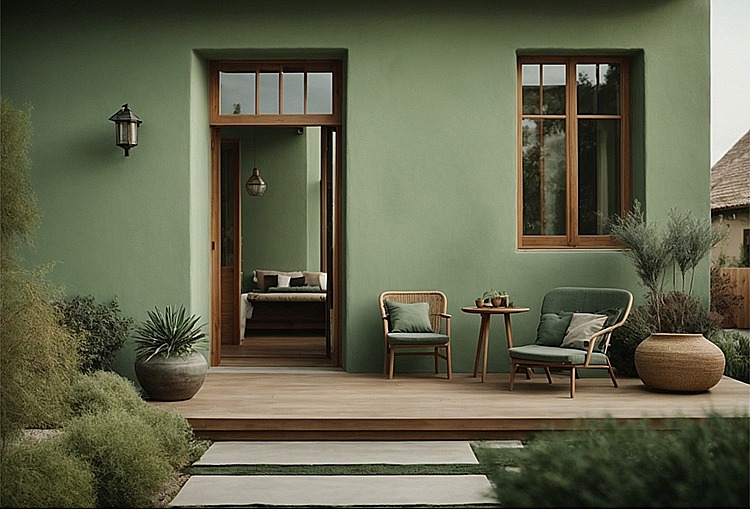
This serene porch leans into a velvety, garden-green stucco that feels botanical and grounded. The smooth plaster surface lets light glide across the walls, while warm wood windows and the low-profile deck pull the exterior into a calm, indoor-outdoor living environment.
Green Shade: A mid-tone, herbaceous green with gentle olive-gray undertones. It’s richer than a sage, so it reads lush and architectural, deepening in color beautifully when engulfed in shadow yet staying composed in full sun.
Benjamin Moore Greenwich Village (#445): A medium, muted green with a quiet sage influence. It feels botanical and grounded (more herb green) so it reads sophisticated rather than minty.
Key Pairings: Honeyed wood doors, windows, and decking add warmth and balance the cool green. Matte black or bronze lighting and hardware sharpen the lines.
Textural elements include things like woven chairs, linen cushions in muted stone or charcoal, and large clay or terracotta planters. Plantings with silvery foliage (olive, lavender, sage) and upright grasses frame the entry without competing with the color. Stone or concrete pavers with tight joints keep the composition crisp and modern.
This modern home uses a deep olive green stucco to anchor the stacked levels and helps blur the threshold between house, deck, and water. Warm cedar soffits and trim cut clean horizontal lines, while the large black-framed windows keep the palette sharp and contemporary.
Green Shade: A saturated, architectural olive with muted gray undertones. It reads earthy and composed. It is darker in shadows, adding to the overall drama of the color, yet refined in full sun without going neon or khaki.
Dryvit's Sweet Clover (495): Sweet Clover is a light, muted green that sits in the sage/moss family. It is more botanical than pastel, with a soft, slightly warm gray-olive undertone.
Key Pairings: Warm wood soffits, fascias, and stair risers add counterbalance and warmth to the cool olive. Slim black window frames and guardrails outline the geometry. Pale concrete terraces and coping lighten the base and echo the interior floors, while charcoal planters and restrained, textural planting keep the focus on what's important.
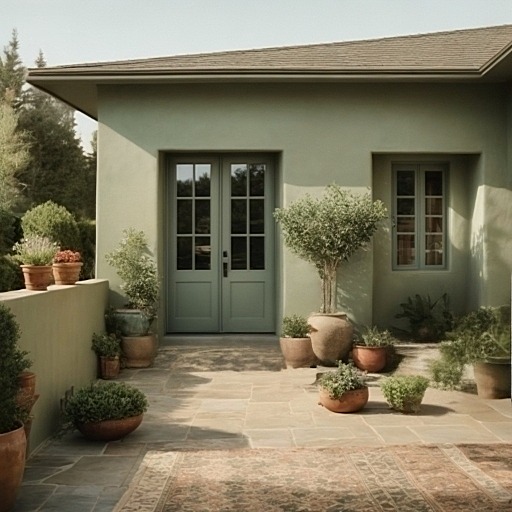
This courtyard keeps things calm and welcoming, with a light sage-green stucco and slightly darker green doors and windows. The color feels fresh in the sun, and the soft, matte walls make the whole entry read easy and relaxed.
Green Shade: A pale, herbal sage with a hint of gray. It’s light enough to feel airy, but still has enough color to avoid looking washed out.
Sherwin Williams' Sea Salt (6204): A soft blue-green color with a light gray veil. It is a calming, spa-like green in daylight and a cooler, misty blue-green in shade. It’s light and airy (high LRV), so it brightens spaces without feeling stark.
Key Pairings: Warm stone or flagstone floors add cozy but very soft contrast. Terracotta pots, olives/rosemary, and other silvery plants fit the vibe without stealing the show. Black or bronze porch lights and hardware give a little pop, and the deeper green on the doors and window frame the area nicely.
This modern façade leans on a deep, olive-green stucco to give the boxy mass a little weight and some calm. The big black-framed windows keep it crisp and current, while the warm wood door, garage panel, and soffits pull the color into a welcoming, residential atmosphere.
Green Shade: A saturated, architectural olive with a soft gray undertone. It looks rich and grounded in shadow, and in afternoon sun it holds color without tipping yellow or khaki.
Custom Color: A medium-deep, earthy green with a soft brown/gray cast... think sun baked moss or olive drab refined. It reads warm and grounded, great for exteriors where you want a calm and natural presence.
Key Pairings: Warm wood at the entry, garage, and soffits balances the cool green. Slim black window frames outline the shapes and add contrast. Pale concrete steps and driveway lighten the base and simple, low plantings with grasses and evergreens keep the focus on the form. Subtle, black sconces finish it off without visual clutter.
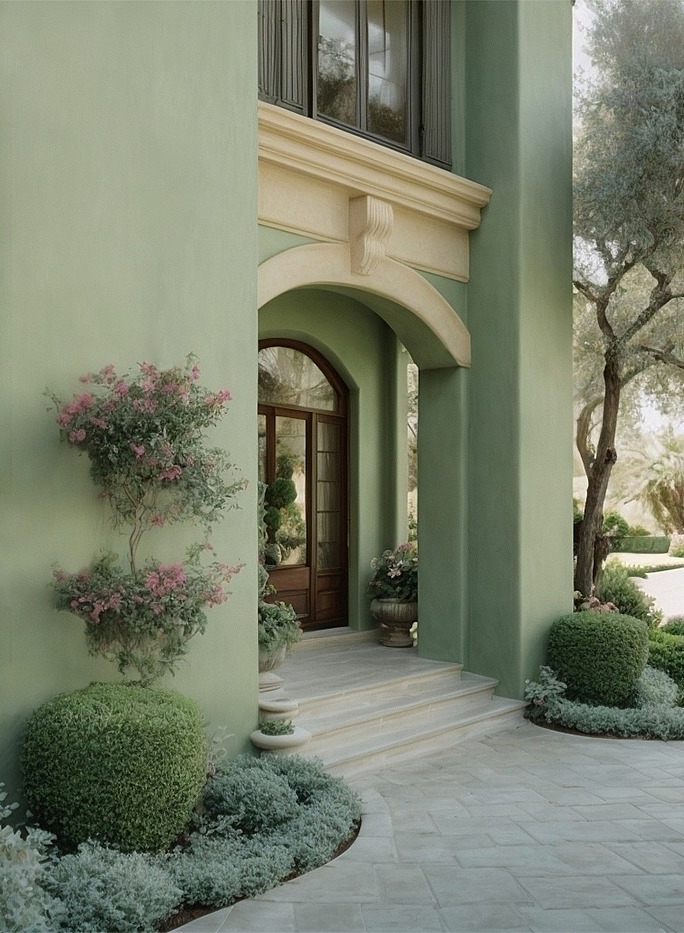
This entry feels bright and welcoming with a light, garden-sage stucco that lets the architecture breathe. Creamy stone walkways, a warm wood door, and soft, silvery plantings tie the façade to the landscape so the color reads fresh rather than flashy.
Green Shade: A pale sage with a gentle olive-gray undertone. It stays soft in full sun, looks a touch richer in shade, and keeps the columns and archways feeling calm and elegant.
Key Pairings: Cream limestone details and steps add lift and highlight the openings. The wood door warms the palette and draws attention to itself. Silvery greens (olive, lavender, and lamb’s ear) blend right into the wall color, while clipped boxwood and pink blooms bring structure and a light pop of color without overpowering the sage.
Green Stucco Options (What to Expect)
Thinking green for your new stucco or a recoat? Good call! Greens sit naturally with landscape and age gracefully. Your two big paths are traditional cement-based finishes or acrylic/synthetic finishes. Both of these finishes can look great, they just behave differently, which makes their appearance very different, especially when it comes to colors.
Traditional Finish Coats: The greens offered in the traditional type of stucco finishes will have a little bit of color variation to them due to the cement based nature of the material and how water tends to react with the color.
The colors will be lighter in general and not deep greens, like you can get with an acrylic type of finish.
- Look & feel: soft, natural variation; a little “stone-like” movement from panel to panel.
- Color depth: tends to run lighter, quieter greens (sage, moss, lichen).
- Aging: weathers beautifully; minor mottling is normal and part of the charm.
- Good fits: farmhouse, Mediterranean, cottages, projects that want an earthy, hand-troweled character.
Popular green examples: LaHabra Mesa Verde, LaHabra Southern Moss, Dryvit Early Moss, Dryvit Glade Green.

Lahabra Mesa Verde

Lahabra Southern Moss
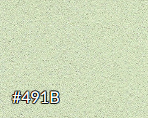
Dryvit Early Moss

Dryvit Glade Green
Acrylic/Synthetic Finishes: If you do go with an acrylic or synthetic stucco finish in a green color, then your choices have opened up greatly!
Since acrylic stucco is very similar to a paint product, you will have many more colors to choose from on the stucco manufacturer's color charts.
- Look & feel: smoother, more uniform color from wall to wall—closer to paint in consistency.
- Color depth:
much wider palette, including deeper olives and blue-greens. Custom matches are easy.
- Aging: holds its color evenly; slight sheen options can read a touch crisper.
- Good fits: modern, coastal, or any project that wants a clean, even read.
Popular green examples: Omega Shade Tree, Omega Raindance, LaHabra Bamboo, LaHabra Montecito.
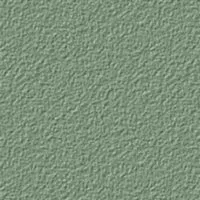
Omega Shade Tree
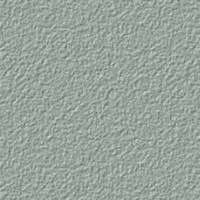
Omega Raindance

Lahabra Bamboo

Lahabra Montecito
You can also get a custom color match in an acrylic or synthetic stucco to match a green that you like from a physical sample or even from a paint manufacturer's paint chip!
If you are planning on painting an existing stucco finish, then the color options are also pretty limitless, along the lines of the acrylic colors I mentioned (above).
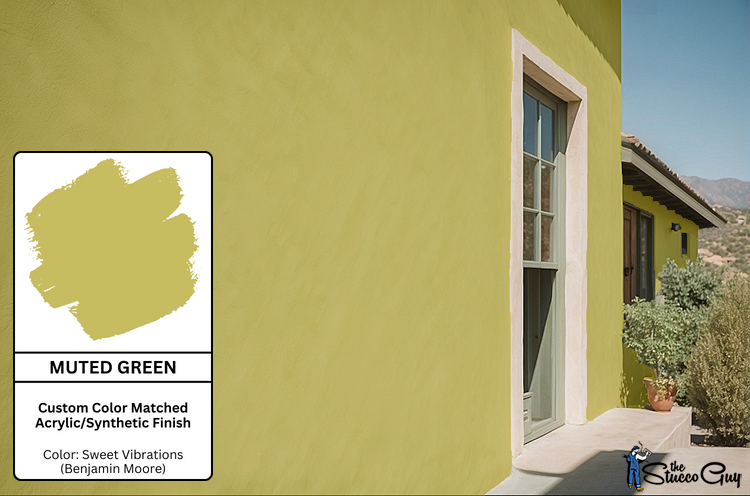
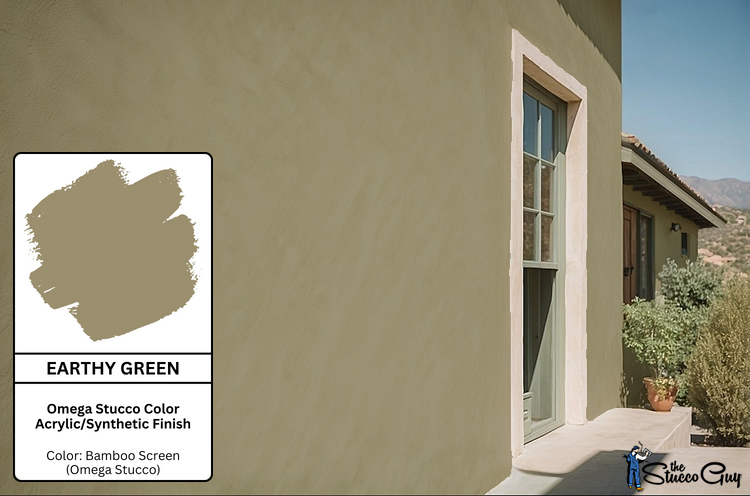
There Are Different "Greens":
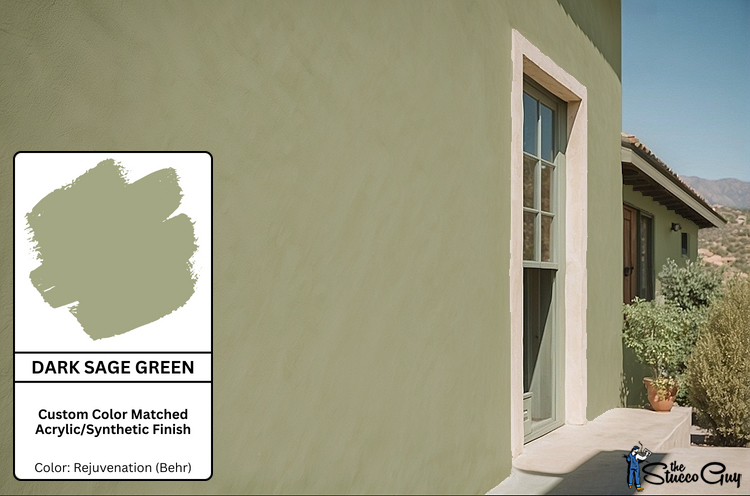
This is pretty obvious, but there are different tones of greens that will make other elements stand out more or less and might even give the same house, with the same trim a completely different look.
I wanted to give you an idea of some of the different green stucco color options out there nowadays, and to do this I used a house and changed the colors of the wall to give you a more visual way to compare the colors.
Note: These are just examples of what can be achieved. A color sample applied to your walls is always recommended before committing to a final color and texture choice.


Trim Colors & Accent Colors:
There were a few different trim and accent colors that popped up time and time again out of the dozens and dozens of green stucco house I looked at.
There were three main colors that I think worked well with the green and these were white (bright and dull), brown shades and grays.
Stained Wood Examples: Some of my favorite houses in my lineup used a slightly darker green color with a darker stained wood, which I thought stood out above the other images.
The stained wood really was a darker brown color for the most part, but a few lighter browns (more natural wood colors) seemed to work well too.
White: White was really used to bring out the trim on a lot of these green houses and from what I noticed, most of these examples were lighter green colors which is why the white trim pieces seemed to work better.
Gray Colors: The Grays that are found in the above picture and other pictures I looked at seemed to be lighter in nature and really was used in any rock work that was applied and/or the color of the roof, almost exclusively.
Take a look at some of the images above to get a better idea of what I'm talking about.
Same Color As Stucco: I did notice a couple of houses that added foam trim around some of the windows and a couple of columns and they used the same color as the stucco, which made it blend in a bit more but you still had that "pop out" look that people are going for.
Roof Colors & Materials...
There were tons of different roof colors I came across when looking at different houses with green stucco siding. This is probably because green is more of a neutral color and will go with a lot of different roof colors, especially since the wall and roof are separate.
The roofing material was also not that specific, as there were metal roofs, comp (asphalt) roofs and tile roofs that all worked well with a green colored stucco.
The Most Common Colors: The four most common roofing colors I noticed were black, brown, gray and even a terracotta red. They all looked good and it didn't seem to make any difference if a lighter green stucco was used with a lighter roof or a darker one, or if a darker green went better with a darker roof and so on.
A Visual Comparison: Just for comparison reasons, I wanted to take a house and change the roof color to give you an idea of how it can change the look and feel of the green color of the walls, so you have a better idea of how it affects the overall look of the building.

Brown Roof

Gray Roof

Lighter Black Roof