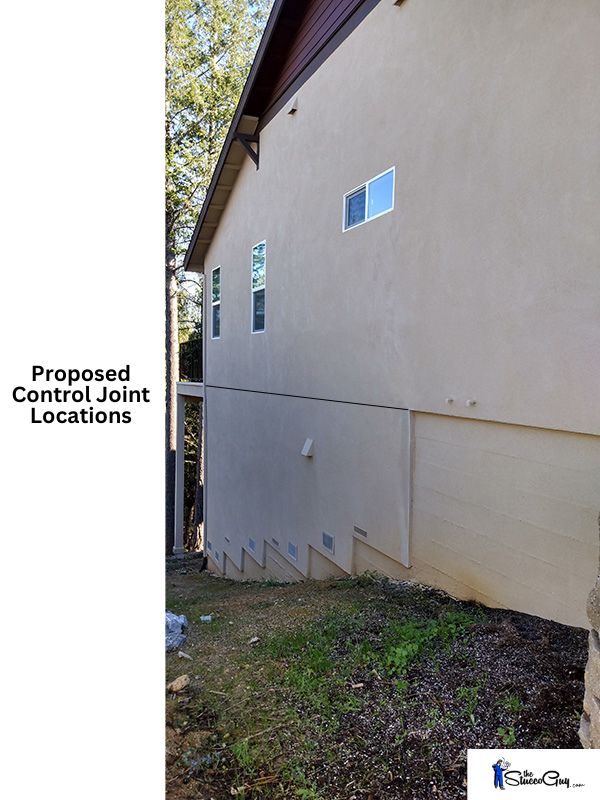
Stucco can be one of the best looking finishes on the exterior of a home, if it is done properly, but larger walls should be broken up with control joints (also referred to as expansion joints) in order to not only be code compliant, but to also help mitigate cracking issues.
In this article, we will cover what expansion/control joints are, what their purpose is and how they can help. Let's dive in!
What Is A Stucco Control Joint?
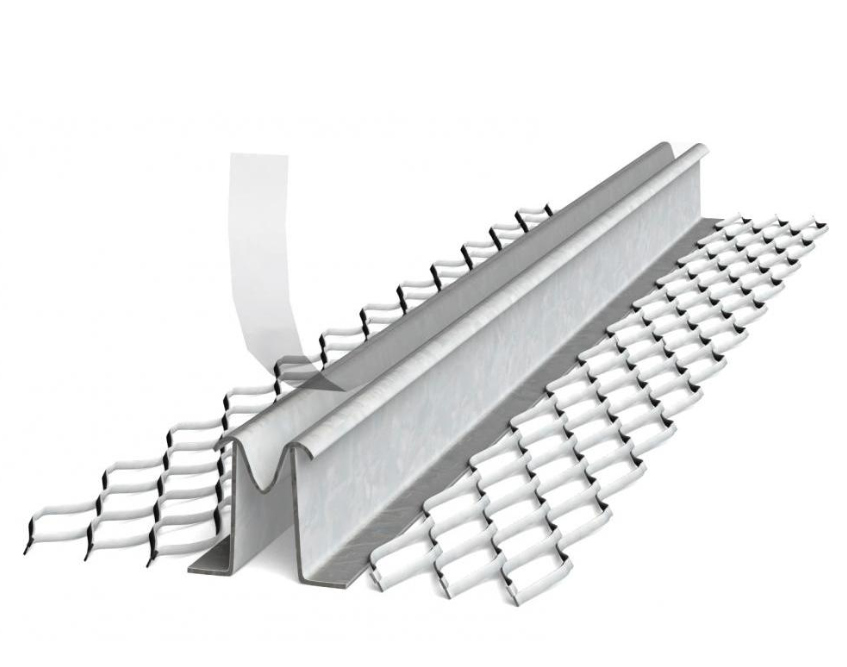
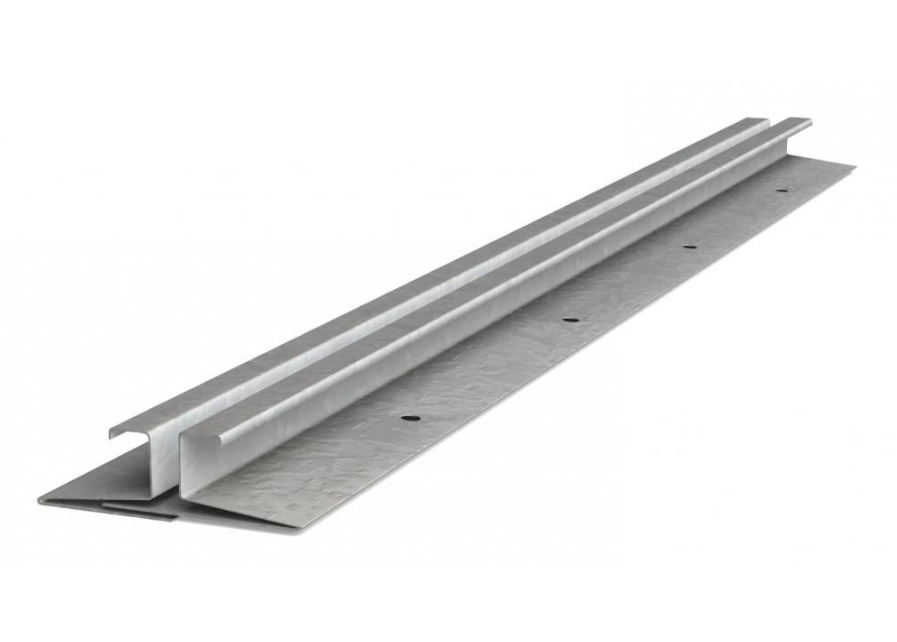
A stucco control joint is a piece of metal that is mounted on a wall (either vertically or horizontally) that allows for a small amount of movement in the stucco system, (mainly related to shrinkage) reducing the chances for cracking to occur on the walls.
These are oftentimes used as an architectural detail when breaking up a wall, which can give a wide range of different looks to a wall by breaking up the available space into smaller sections that will change the overall look and feel.
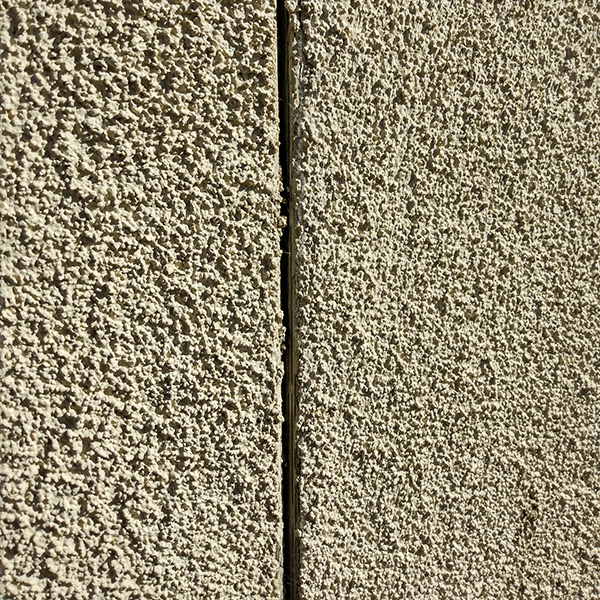
These are formed from a single piece of metal and come in different sized reveals, which is basically the gap that will be visible after it is installed on the wall and the stucco is installed. Most residential applications of control joints usually have a pretty small reveal that is roughly 1/4" to 3/8" in size. It is usually painted to match the color of the stucco.
How A Control Joint Works...
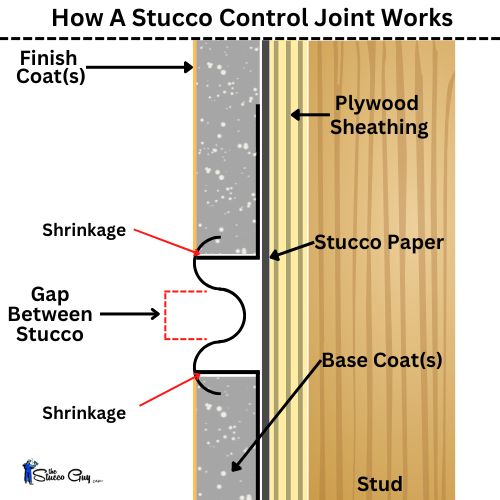
When it comes to helping with the effects of shrinkage cracking, when new stucco is installed on a wall, a control joint works like its name suggests. It provides a controlled joint that the stucco will shrink away from, due to the different material that is used. The gap in the stucco is also a critical component that helps with this as well.
The image below illustrates this (in a simplified form) and where the shrinkage cracking will hopefully occur. By having the shrinkage occur in these areas, you are essentially avoiding the shrinkage cracking from occurring somewhere in the wall, in the form of a small, unsightly crack.
What Is A Stucco Expansion Joint?
A stucco expansion joint is similar to a control joint but allows for expansion in the wall assembly, so actual movement of the wall itself. This can occur from expansion (heat of the day) and contraction (cool temps at night) and other causes of movement within the wall.
Expansion joints are usually a two piece design and that is how it allows for movement. One piece can slide into the other piece, which allows movement within the wall itself.
These can also be placed either vertically or horizontally, depending on the situation and the type of expansion joint it is. The reveal for expansion joints on residential projects can range in size, but the most common sizes range from 1/4" to 5/8".
What Does A Control Joint Look Like On A Finished Wall?
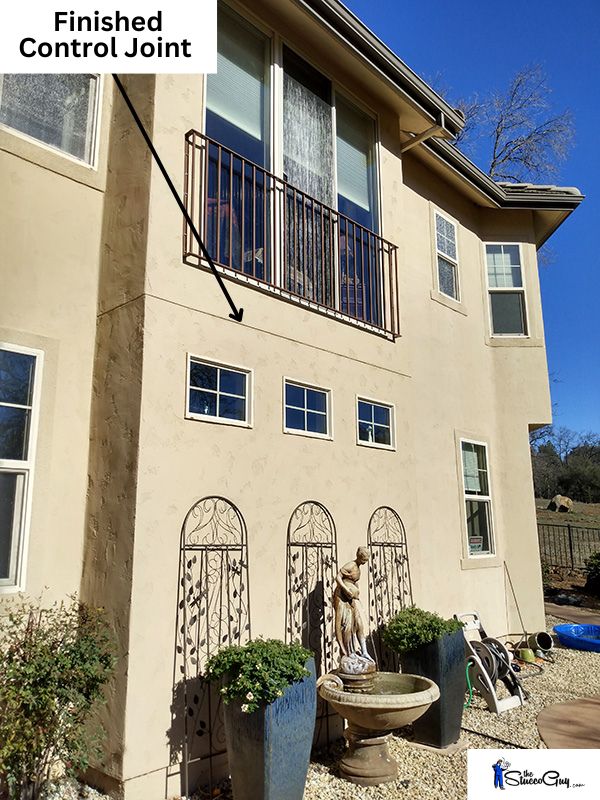
After all of the stucco is placed on the wall, only a small gap is visible and if it is placed in a good location on the wall, can break up the wall in a visibly pleasing way.
The image below is a pop out on a home that has a control joint placed where the first floor and the second floor of the house meet, which is a great place to install one of these joints. It also breaks up the wall naturally and does not look "completely" out of place.
Where Should Control Joints Be Placed?
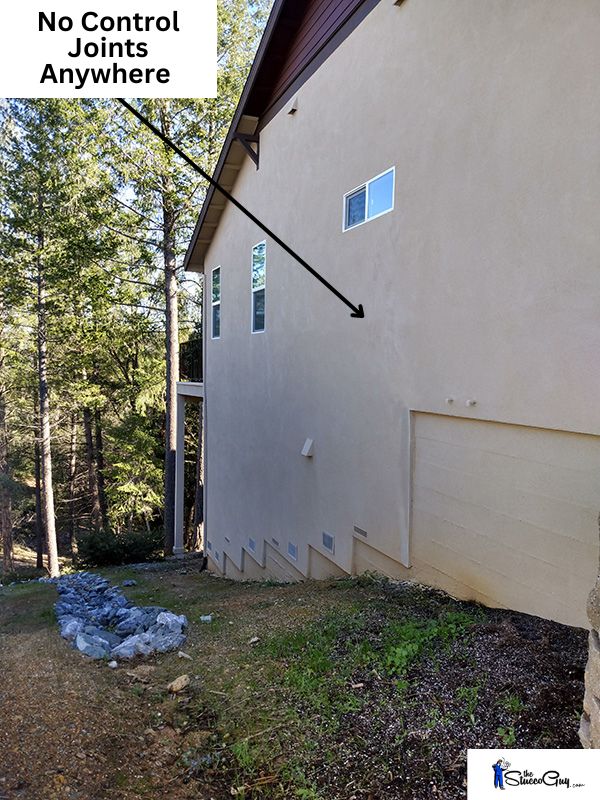
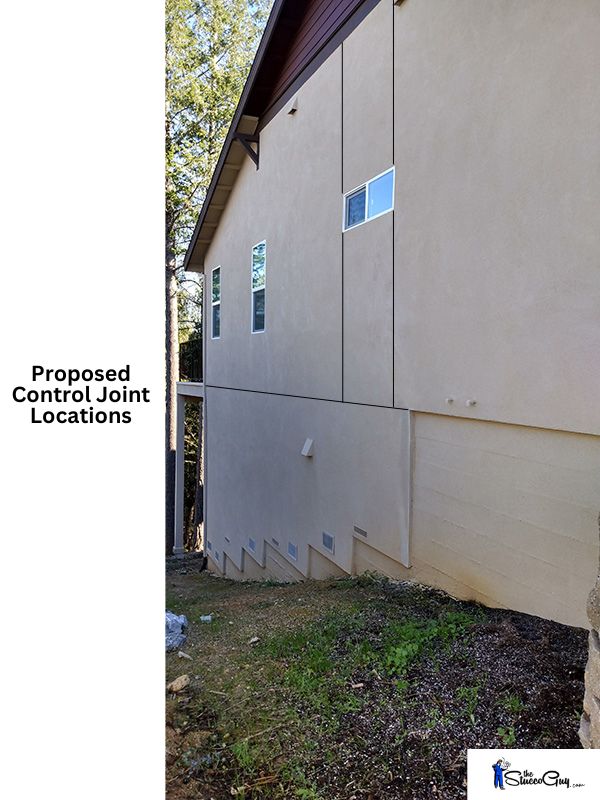
There is a building code that specifies the maximum square footage of a wall before a control joint needs to be used (144 sq. feet maximum) and a maximum distance between two separate pieces, both vertically and horizontally (18 feet maximum), but not all walls will be able to adhere to these maximum square footage requirements AND look nice, at the same time!
This is where you will have to get creative with the placement of your control joints and there are different layouts that you could possibly use on a single wall. Let's use a mockup wall with no joints in it to see what some of the possible scenarios could look like...
Some Examples Of Control Joints Being Used
Coming Soon!