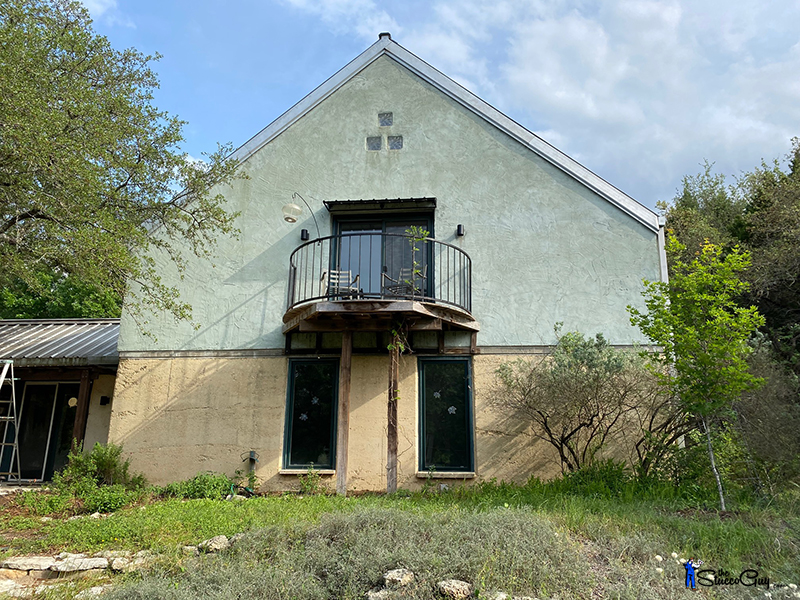
Barbara is looking to change the color of her traditional stucco on a rammed earth block house from light sage green to charcoal gray. She doesn’t want to paint the stucco, and prefers it to remain more breathable.
Barbara's Question:
We have traditional stucco on our rammed earth block house and landscape walls. I want to simply change the color from light sage green to a charcoal gray. I am not fond of painting it as I like it to be breathable. I have the powdered stucco dye and have a sculpture degree, so I am familiar with working with materials of all kinds.
I am thinking I could make a topcoat with a slurry of water, a bit of lime, and the dye. Or just water and the dye. Would this work? The bottom part of the house in the photo is rammed earth, the 2nd story is rammed earth block that has been stuccoed. Thanks!
Answer:
Hello Barbara! Your approach to changing the stucco color while keeping the surface breathable is smart, and there are a couple of ways you can achieve this. Here's what I'd suggest:
1. Using Fog Coat
Fog coat is a fantastic option for recoloring traditional cement-based stucco finishes. It’s a breathable, cementitious coating made just like stucco but with very fine sand and can be sprayed on using a garden sprayer. This method allows for color adjustment without sealing the surface like paint does. Here's a quick overview on how to apply it:
- Mix the fog coat according to the manufacturer’s instructions, combining the color pack or color packs with water.
- Screen it and pour it into a large garden sprayer.
- Apply the fog coat using even coverage, working in smaller areas. Shake the sprayer regularly to make sure everything is mixed together at all times.
- Note: Fog coat only works on unpainted, cement-based finishes, so it should work on your stucco, from what I can see in the image.
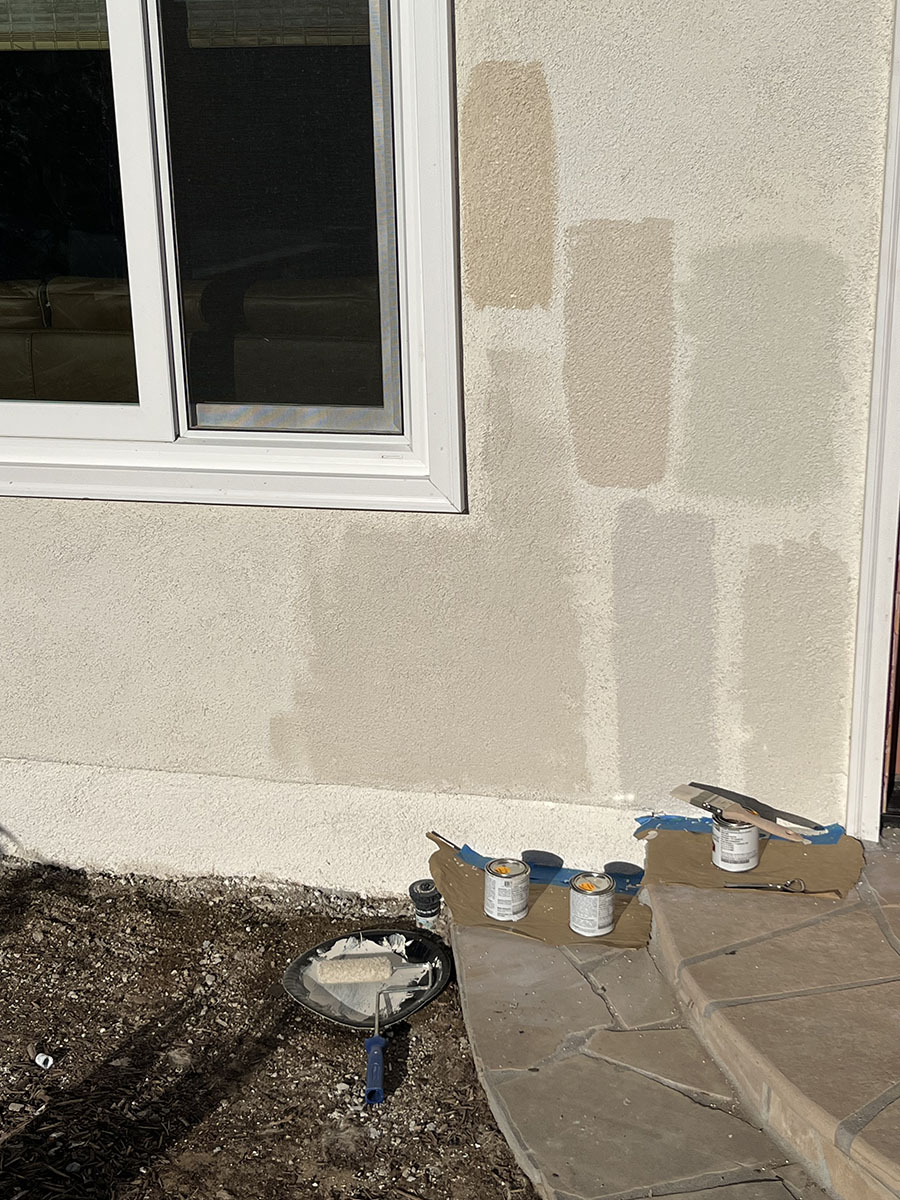
You may have to experiment with the fog coat to make sure you can achieve the color you are after and make sure that it hides the existing color underneath too.
2. Using Water and Stucco Dye
Applying water mixed with your powdered dye directly to the stucco is another option. However, this method might lead to uneven color intensity since the dye will soak into the stucco at different rates.
- If you choose to go this route, test a small area first to see how the color adheres and dries.
3. Slurry Mix with Lime and Dye
While adding lime to your slurry might help with workability, lime could introduce issues, such as efflorescence or color instability, down the line. Lime isn’t necessary for recoloring an already cured surface, so I’d recommend avoiding it in this case.
Recommendations for Experimentation
- Test small sections with each method to determine which produces the charcoal gray you're envisioning.
- Be mindful that darker colors like charcoal gray might require more pigment and could highlight any inconsistencies in the surface.
Given your expertise in working with materials, you should be able to experiment effectively. Let me know if you have more questions or need further clarification!