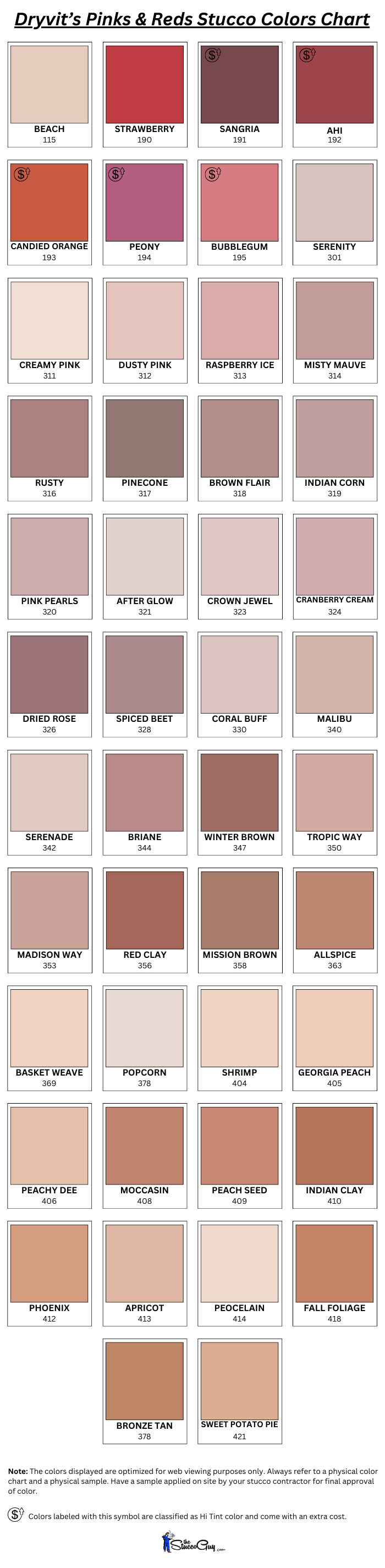
The Dryvit Pinks & Reds Stucco Colors Chart brings together a striking array of warm and inviting hues, ranging from soft pastels to deep, bold reds. Whether you’re looking for the gentle elegance of "Creamy Pink" (#311) or the rich vibrance of "Sangria" (#191), this chart offers a diverse palette to suit a variety of styles.
Perfect for adding warmth, character, or dramatic flair, these colors are versatile enough to enhance both modern and traditional architectural designs.
How to Read the Color Chart
This chart is designed to make selecting your ideal shade simple and precise. Each section of the chart provides key details to help you make an informed decision:
Color Swatch: The visual representation of each shade, showcasing its depth and tone.
Color Name: A unique name that captures the mood or essence of the color.
Color Number: A numerical identifier for easy reference and communication.
Color Swatch
The color swatches offer a direct look at each shade's personality. For example, "Peony" (#194) is a lively and playful pink that exudes charm, while "Rusty" (#316) has a deep, earthy tone that adds a sense of warmth and history.
"Phoenix" (#412), with its bold orange undertones, is ideal for creating an energetic and welcoming appearance. Remember, the swatches are best viewed as a starting point, as lighting and texture can subtly shift their appearance in real-life applications.
Color Name
Each name is thoughtfully chosen to evoke the feeling or inspiration behind the shade. "Bubblegum" (#192) delivers a youthful and fun aesthetic, while "Indian Corn" (#319) reflects an autumnal, rustic appeal. For something softer, "After Glow" (#321) offers a delicate and serene vibe, perfect for creating a tranquil exterior.
Color Number
The numerical codes ensure precision when communicating your chosen color. For instance, "Strawberry" (#190) provides a rich and vibrant red, while "Shrimp" (#404) introduces a muted, peachy-pink tone. By using the color number, you can eliminate confusion and guarantee the correct shade is selected for your project.
Additional Notes
- Hi Tint Colors: Shades like "Candied Orange" (#193) and "Peony" (#194) are labeled with the "$" symbol, indicating they require Hi Tint pigment. Be sure to confirm details with your supplier for potential cost or mixing requirements.
- On-Site Testing: Testing a sample on-site is always recommended. For example, "Georgia Peach" (#405) might appear brighter or softer depending on the surrounding lighting and texture.
- Collaboration Tips: When discussing your choice with contractors or suppliers, reference both the name and number—such as "Allspice" (#363)—to ensure accuracy and alignment with your design goals.