What Is Stucco Fog Coating?

If you have a traditional (cement based) finish on your stucco walls then chances are you have probably read about stucco fog coat somewhere and have a few other questions related to what stucco fog coat is, how it works and why you would need to use it.... Right?

This article covers a lot of those topics and helps answer that question.

Stucco fog coating is really a simple and straightforward process and once you have the basics, you will have a pretty good understanding of what fog coat is and how it works.

What Does Fog Coating Do

What Is Stucco Fog Coating?

Stucco fog coating is a spray-applied product designed for traditional cement-based stucco finishes. It helps to even out any color variations, particularly in lighter tones, providing a more consistent and uniform appearance.

It is a spray or brush applied product that uses powdered color pigments and cement (with no aggregate) and becomes an integral part of the stucco wall and will usually last several decades if applied correctly.

How Do I Apply A Fog Coat?

Fog coat is typically applied to a stucco wall using a pump type sprayer (garden sprayer), which is readily available at most home improvement stores or online. This type of sprayer allows for an even application of the fog coat material and is relatively simple to use.

You can also apply a fog coat with a brush, but this method is best suited for smaller areas. If you’re working on a larger surface, spraying is highly recommended, as it provides a more even application and is much faster for covering larger areas.

Since there is no aggregate in stucco fog coat, it can be sprayed, which really makes it more of that paint type of product without having to repaint every 3 to 7 years.

When a fog coat is sprayed onto a stucco wall, it penetrates the surface rather than simply sitting on top of it, like paint does. The stucco absorbs the color, integrating it into the material itself. This process makes it function more like a stain than a traditional paint product, creating a more natural looking and longer lasting finish.

Here's a condensed version of the process:

  • Prepare the surface: Ensure the stucco is clean and free of dirt, dust, or debris. Fog coats work best on unpainted, porous stucco.

  • Mix the fog coat: Combine the fog coat material with water until it reaches a sprayable consistency, following the manufacturer’s instructions.

  • Set up the sprayer: Use a specialized sprayer designed for fog coat application. Ensure it is clean and functioning properly.

  • Apply the fog coat: Spray the mixture evenly over the stucco surface, working in consistent, overlapping passes to ensure uniform coverage.

  • Allow to dry: Let the fog coat dry completely, usually within a few hours, depending on weather conditions.

  • Optional second coat: If needed, apply a second coat to achieve the desired color or finish consistency.

Why Would I Need To Fog Coat My Stucco?

Fog coating stucco is typically done at two key stages in the construction process.

  1. Refreshing Existing Stucco: Fog coats are commonly applied to older buildings where the stucco color has faded or become stained over time. Spraying on a fresh fog coat rejuvenates the exterior, restoring it to its original color and gives the building a renewed appearance.

  2. Correcting New Stucco Finishes: Fog coating is also used immediately after the finish coat is applied if there are any significant and noticeable color variations in any of the walls. This helps even out the color and ensures a consistent, uniform look across the all surfaces that need to be touched up.
An Example of Discoloration of Stucco

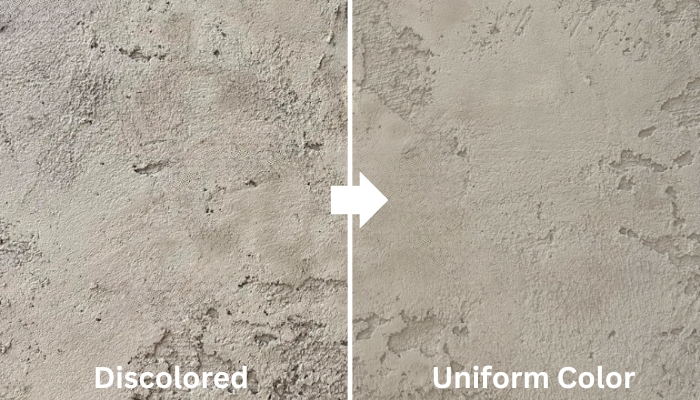
Color variation in cement-based stucco finishes is completely normal. Factors like excess water on your float, humidity in the air, drying times (whether fast or slow), and other environmental or application conditions can all contribute to uneven color tones in the finish.

Some people like the slight variation of color found in the traditional stucco finishes and others can't stand it, so fog coating the walls will even out the variations and make them a more even and solid color, overall.

Fog coating is much quicker to apply to walls, especially when compared to applying any type of traditional stucco finish. Since it’s sprayed on, it allows for an even and consistent color across the entire surface with minimal effort.

Fog Coat Colors Are Something To Look Into:

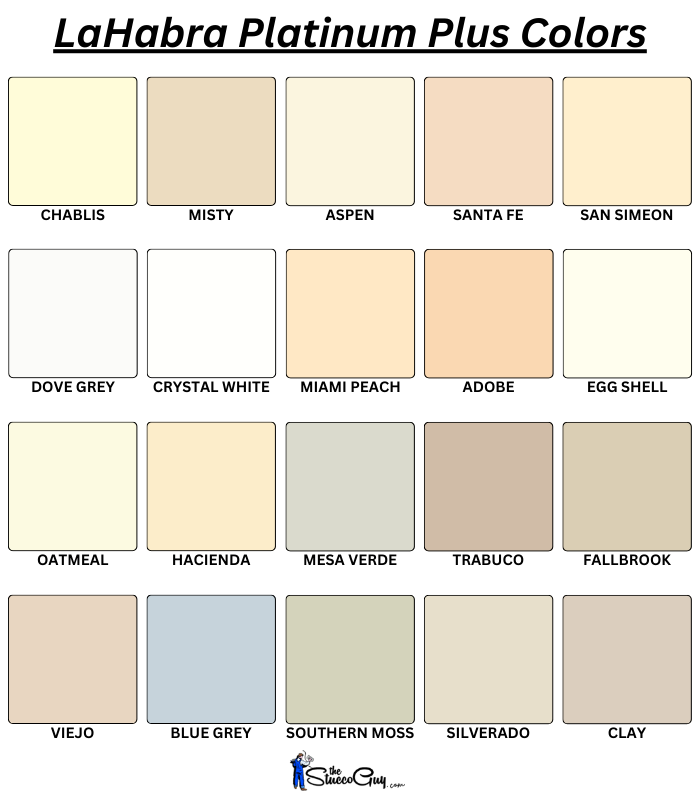
Color Charts - There are specific colors that you can choose from and every stucco manufacturer has a little bit different color variation, so you will want to check out different manufacturers unless you know the specific brand of stucco that is used on your house.

If this is the case, then you can just get a matching fog coat color to match your existing color as close as possible.

LaHabra Platinum Plus Colors

I have created a post that brings together some of the most popular stucco manufacturers' fog coat color charts in one convenient location. This makes it much easier to compare the different color options side by side. If you’re interested, I highly recommend checking it out!

Custom Colors - It's worth noting that most stucco manufacturers offer custom color options. If you provide a sample, they can typically match it to create a custom fog coat color that suits your needs.

Color Limitations...

Fog coat colors are typically neutral and "earthy" tones, designed to complement natural surroundings.


When selecting or providing a color sample, make sure it closely matches these muted hues and avoid anything too vivid or overly bright, as it may not blend well with the intended aesthetic.

Always request a color sample before ordering custom fog coat material to ensure the color match is as close as possible. This step is crucial because creating custom fog coat colors is different from mixing paint and comes with certain limitations.

Test It Out First...

It's always a good idea to test a small, inconspicuous area of the wall before applying fog coat to larger, more noticeable areas. This allows you to see how the color turns out without affecting a highly visible area that could become an eyesore.

Are There Any Drawbacks To Fog Coating Stucco?

While fog coating offers an effective and affordable way to refresh cement based stucco finishes and correct color variations, it does come with some limitations. 

Color Limitations - You can use a fog coat to change the color of your stucco, but it’s primarily designed to even out color variations in traditional stucco finishes rather than completely alter the color. If you plan to use a fog coat for a color change, it’s a good idea to test a small area first to see the results before applying it to the entire building.

Color Choices - Since fog coat material is cement-based, the available color options are typically limited to neutral and earthy tones, as reflected in most stucco fog coat color charts. Bright and vibrant colors, like those found in paint colors, are not achievable with fog coating.

Limited Applications - Fog coating is specifically designed for traditional cement-based stucco finishes. It’s a cement-based product, so it relies on the porous nature of the stucco surface to absorb the color sprayed onto it. 

This means it won’t work on painted surfaces or acrylic finishes, as they lack the porosity required for absorption. As a result, fog coating is limited to walls with a traditional cement-based stucco finishes, only.

What Types Of Stucco Finishes Can Accept A Fog Coat?

As mentioned earlier, only stucco walls with a traditional cement-based finish can accept a fog coating. This is because the existing stucco needs to absorb the fog coat material, and cement-based products are naturally porous and moisture-absorbing, making them ideal for this application.

Painted surfaces, however, are not suitable for fog coating. If your stucco is painted, the paint would need to be removed, or you would need to apply a full recoat to the entire building instead.

Perform A Water Test...

  • Test with water: To perform the water test, spray a section of your stucco wall with a water hose.
  • Observe the color change: If the stucco gets significantly darker when wet and then returns to its original shade as it dries, it likely has the right type of finish for a fog coat.
  • Porosity indication: This color change indicates that the stucco is porous enough to absorb the fog coat properly.
  • About Me Image
    About the Author

    The Stucco Guy

    Ryan Retired Stucco Contractor

    I’m Ryan, a longtime stucco contractor who has spent plenty of years getting dusty, chasing cracks, matching finishes, and figuring out what actually works in the real world. I created TheStuccoGuy.com to make stucco a little less confusing, help homeowners avoid expensive mistakes, and give you practical answers without all the fluff.

    Take a look around, and if something still has you scratching your head, send me a question. I’m always happy to help.

    Leave a Comment:

    9 comments
    Gary Alborn says

    First time trying fog coat. I order two bags. Thank GOD I did not mix the entire bag. This s**t has very fine sand in it. I’m having to strain it through a 150 mesh cone screen to get the crap out of it. Sorry for the language, but I’ve been to H**l and back with this s**t. Called the tech rep for La Habra…and the local sales rep. she brought me two more bags and guess what? SAME S**T. I can send you a photo of the sand. There is NO WAY you would get this through an airless sprayer, I can’t even get it through a garden sprayer.

    Reply
      The Stucco Guy says

      Hi Gary,

      You’re correct—fog coat does have sand in it, which is why it needs to be triple-screened before application. It’s typically sprayed using a pump-style garden sprayer, and you’ll need to agitate it regularly to keep the mix consistent. Make sure to follow these steps, and it should work as intended. Let me know if you have more questions!

      Reply
    Tracy says

    Ryan,

    Is there any “Stucco Fog In-A-Can” product on the market?
    I have to fog a couple fairly small areas (two 3’x3’ sections)?

    //Tracy

    Reply
      The Stucco Guy says

      Hi Tracy,

      Currently, there isn’t a “Stucco Fog In-A-Can” product available. Fog coat products typically come in larger quantities and are designed for more extensive coverage. For smaller sections like the ones you’re working with, it means you’d have to prepare a batch from these larger bags. This requires mixing a full bag with a color pack to ensure the color consistency is right, which might be more than you need for just a couple of 3’x3′ areas. It’s definitely a bit of a challenge when you only need to touch up small patches.

      Reply
    Bill says

    We have several hairline cracks in color coat that we are caulking. Should we fog coat after, or paint? We have smooth (Santa Barbara) stucco.

    Reply
      The Stucco Guy says

      The caulking will not accept the fog coat and will show through afterwards, unless a top coat of stucco finish is applied over that. That will be hard to achieve a uniform color though. Painting would be a lot easier.

      Reply
    Bob says

    Thanks for the information about fog coating stucco. You have taught me more in a few minutes than I have learned on my own!

    Reply
    Alicia Zoroya says

    WHAT IS THE PROCESS IN APPLYING A FOG COAT TO COVER UP CRACKS IN A STUCCO WALL?

    Reply
      The Stucco Guy says

      After you address the cracks, you will have to add some thinned out stucco finish material that goes over the crack repair spots and try to match the texture and color as closely as possible and then fog coat the whole wall.

      Reply
    Add Your Reply